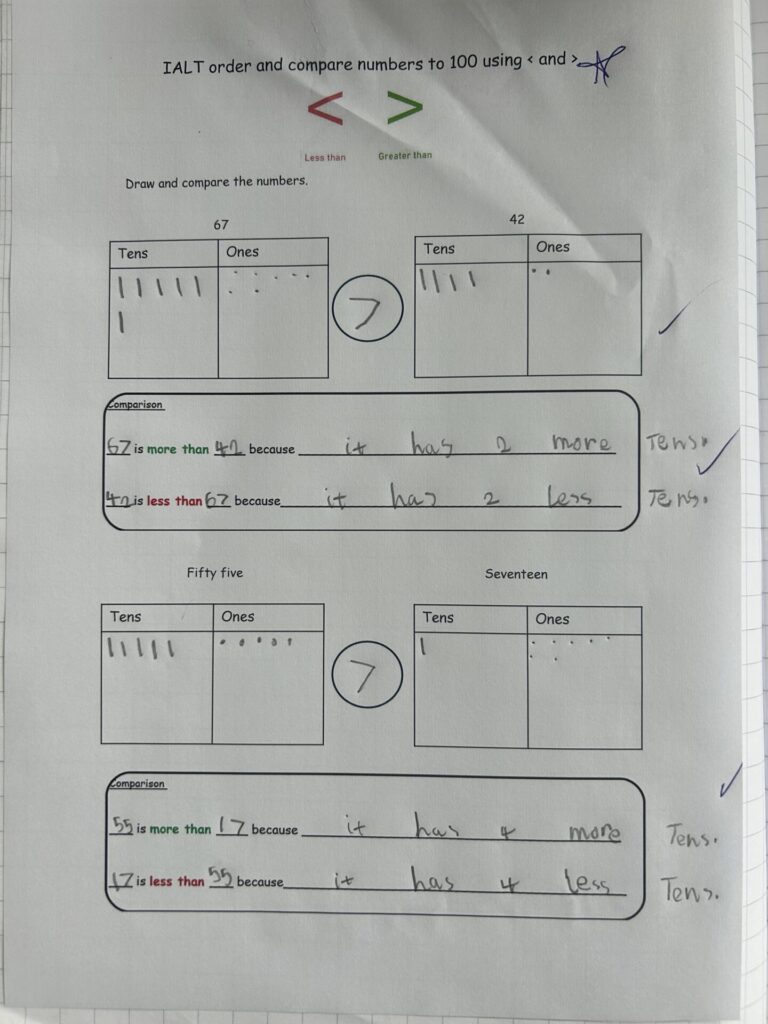
This week in maths, we have been developing our understanding of place value by exploring how numbers can be thought of as ‘ten and some more’. We have been learning to find the nearest multiple of 10 and then identify how many more we need to make a given number. This is helping the children to understand the value that each digit represents in a written number and to see this in concrete, pictorial and abstract ways.
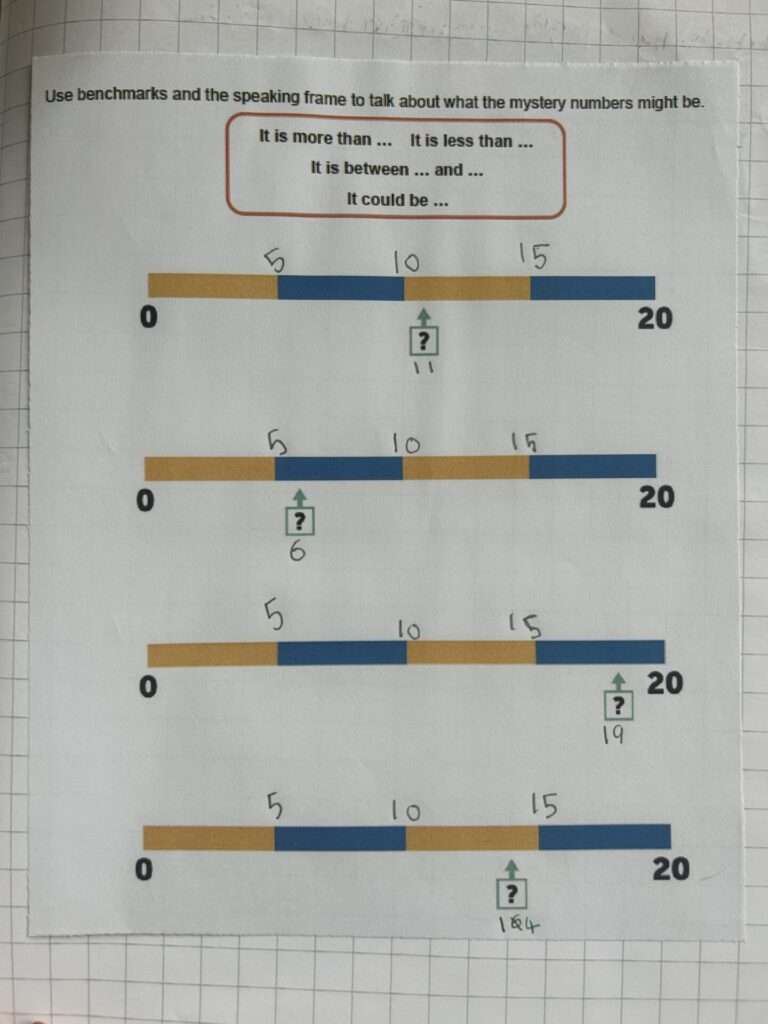
We began our learning by benchmarking on a number line and beadstring. Benchmarking is an important skill in Year 2 as it helps children to develop a strong sense of where numbers sit in relation to familiar landmarks, such as 0, 10, 20, 50 and 100. The children practised estimating where a number might be and then checking their thinking. They even had to work out a mystery number, using the information they were given to narrow down the possibilities. This encouraged them to explain their reasoning and use their knowledge of number relationships.
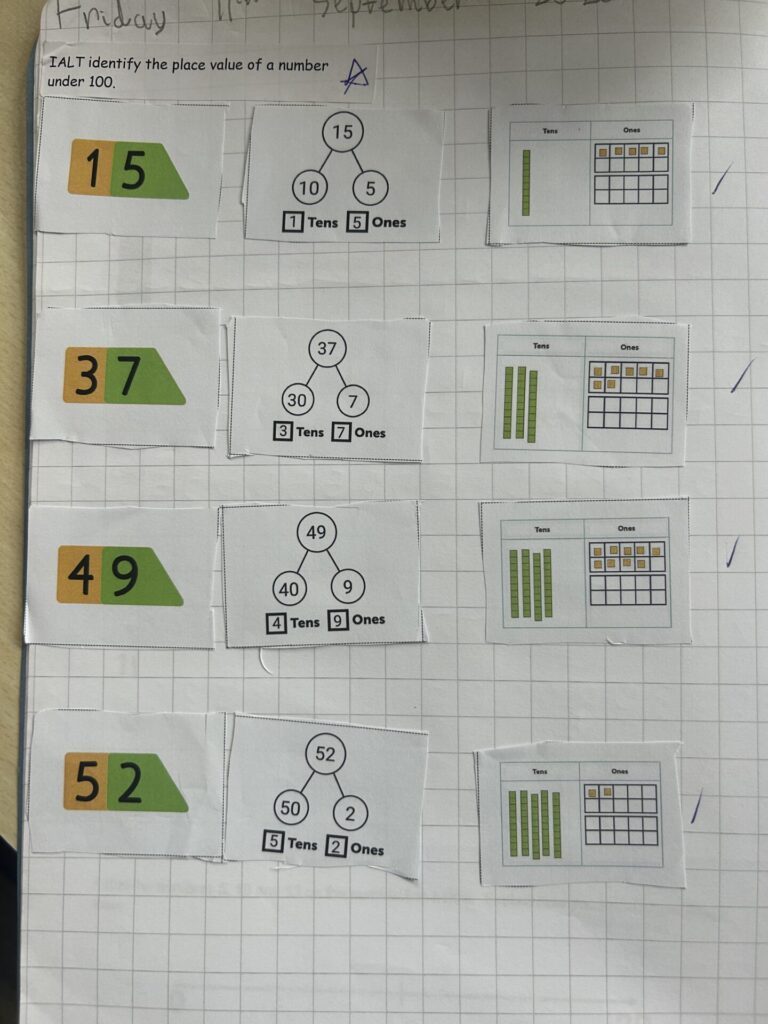
We then explored three different ways of representing numbers: place value cards, a place value table using Dienes, and the part-whole model. The children worked on matching these representations and explaining how they knew they showed the same number.
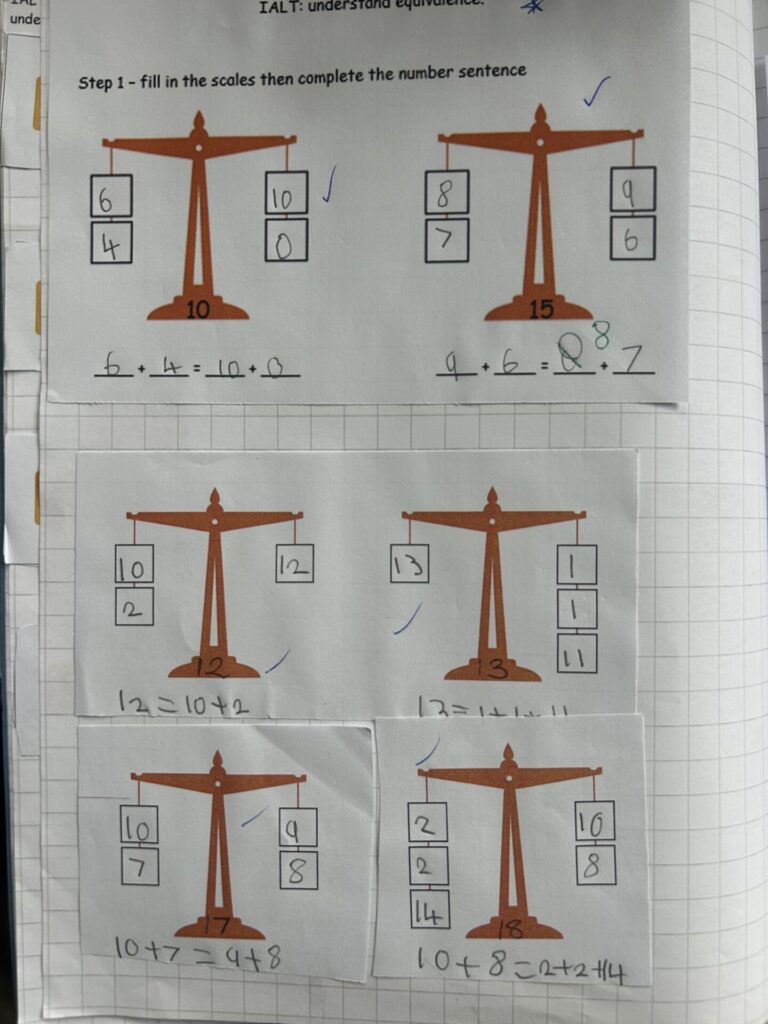
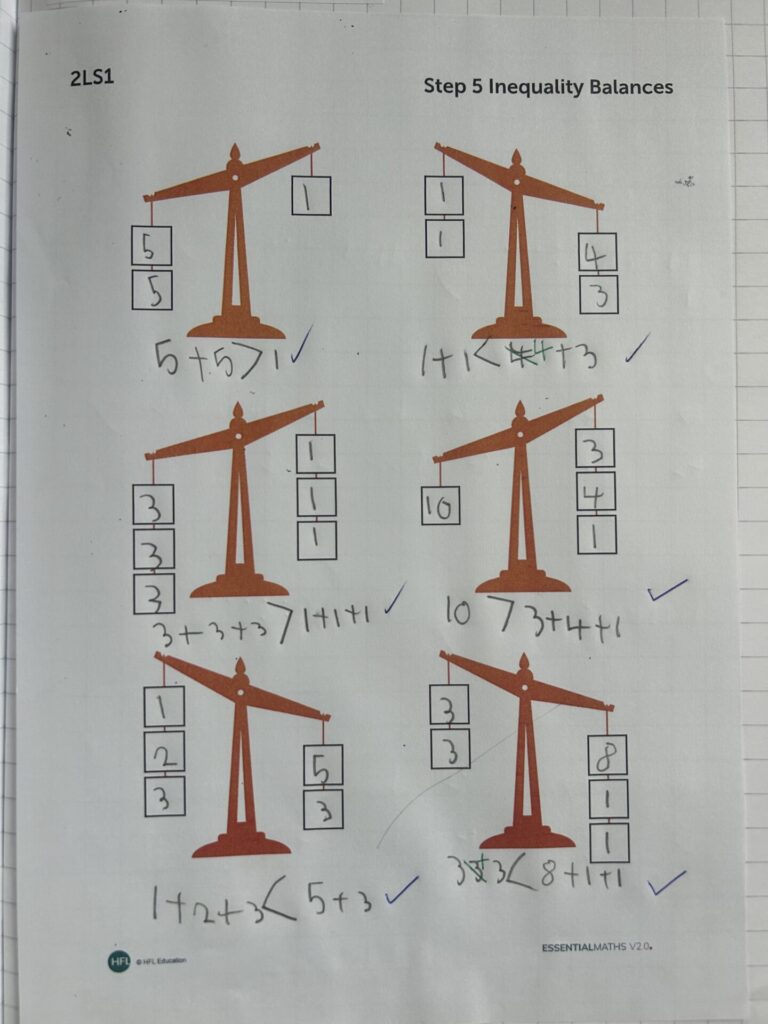
Next, we moved on to equivalence and inequality, using scales to help us understand the meaning of equal and unequal. The children particularly enjoyed using weighted Numicon to see how the scales changed when we added or removed amounts. This provided a practical way for them to explore the idea that adding ‘a little bit more’ can change the balance. We then transferred this understanding into our written work, carefully using the equal (=), greater than (>) and less than (<) signs.
Finally, we combined our understanding of tens and ones with our learning about inequality. The children compared different two-digit numbers and explained which was greater or smaller. They began to recognise that when comparing two-digit numbers, we need to look carefully at the number of tens first, before considering the ones. We practised using the language ‘more than’ and ‘less than’ to explain our comparisons and justify our answers.
It has been a busy week of practical exploration, discussion and reasoning, and the children have been developing a much stronger understanding of how numbers are built and how the value of each digit changes depending on its position.
Maths to Try at Home
Here are three simple activities you could try together:
-
Make a number: Choose a two-digit number and ask your child to show it using tens and ones. For example, 47 is 4 tens and 7 ones. Can they draw it, build it or explain it in another way?
-
Number comparison: Choose two two-digit numbers and ask, “Which is greater? How do you know?” Encourage your child to use the language more than, less than, tens and ones.
-
Find the ten: Pick a number such as 36. Ask your child, “How many more do we need to make 40?” Try different numbers and encourage them to use a number line, counting in ones or their knowledge of number bonds to 10 to explain their thinking.