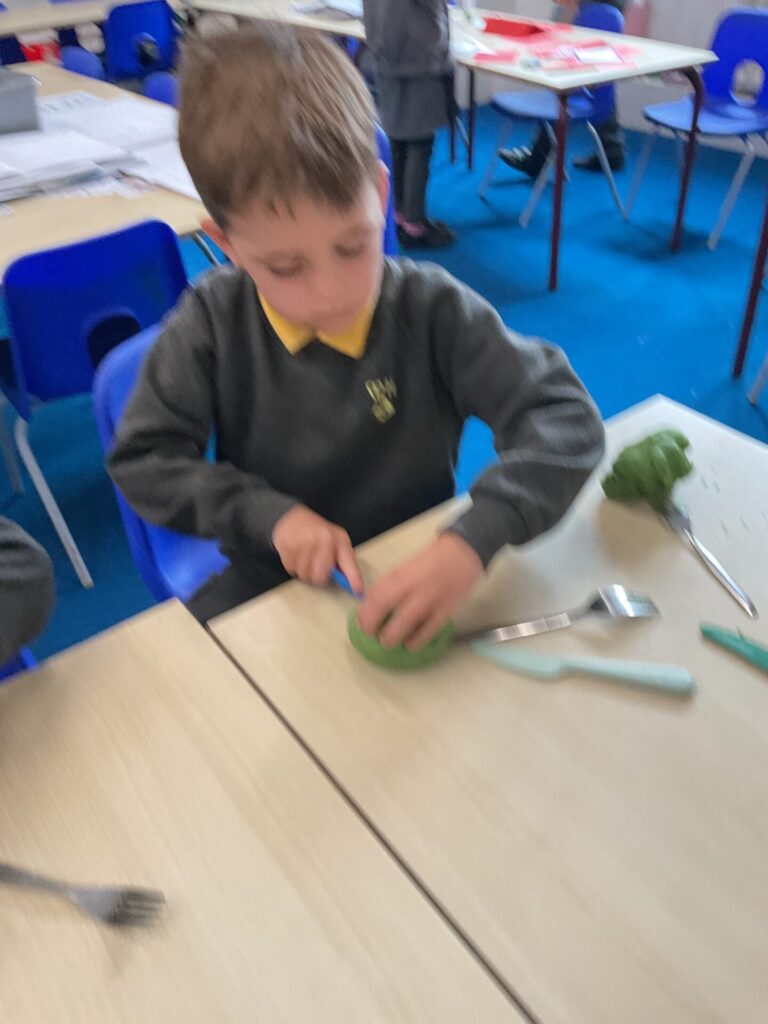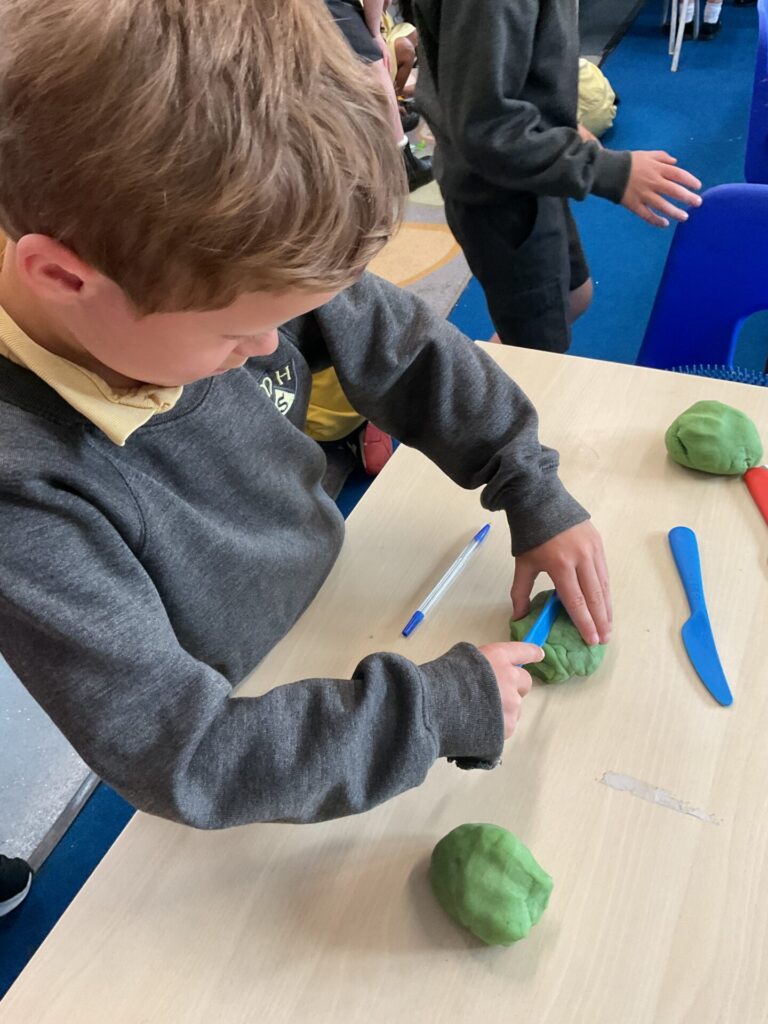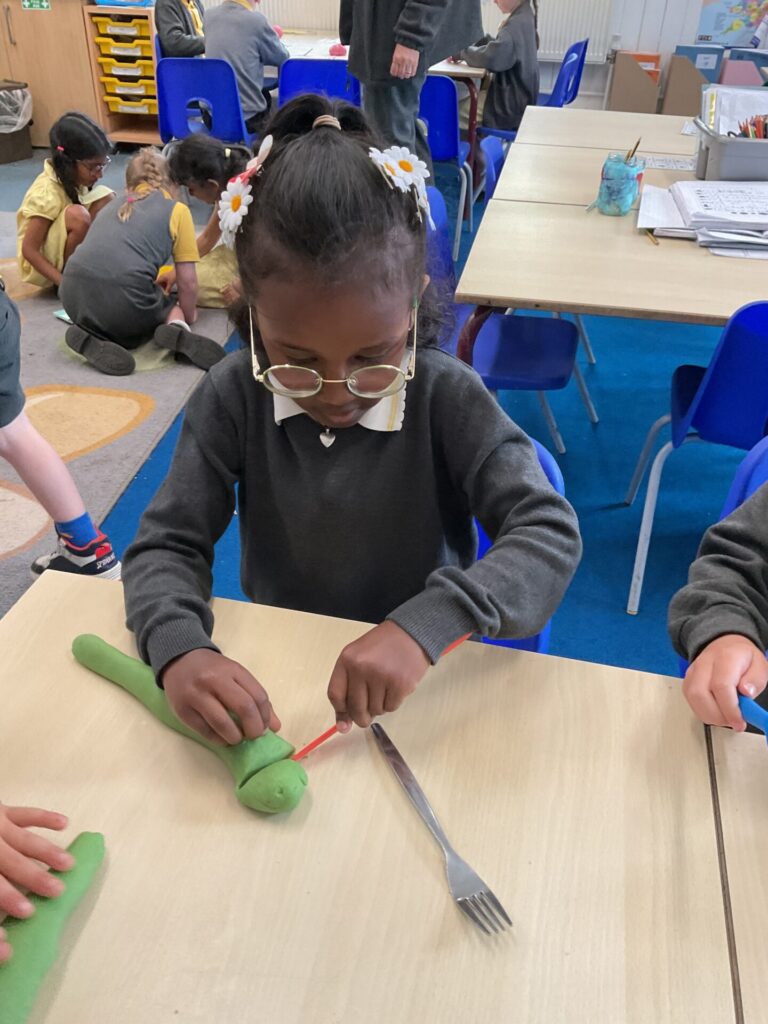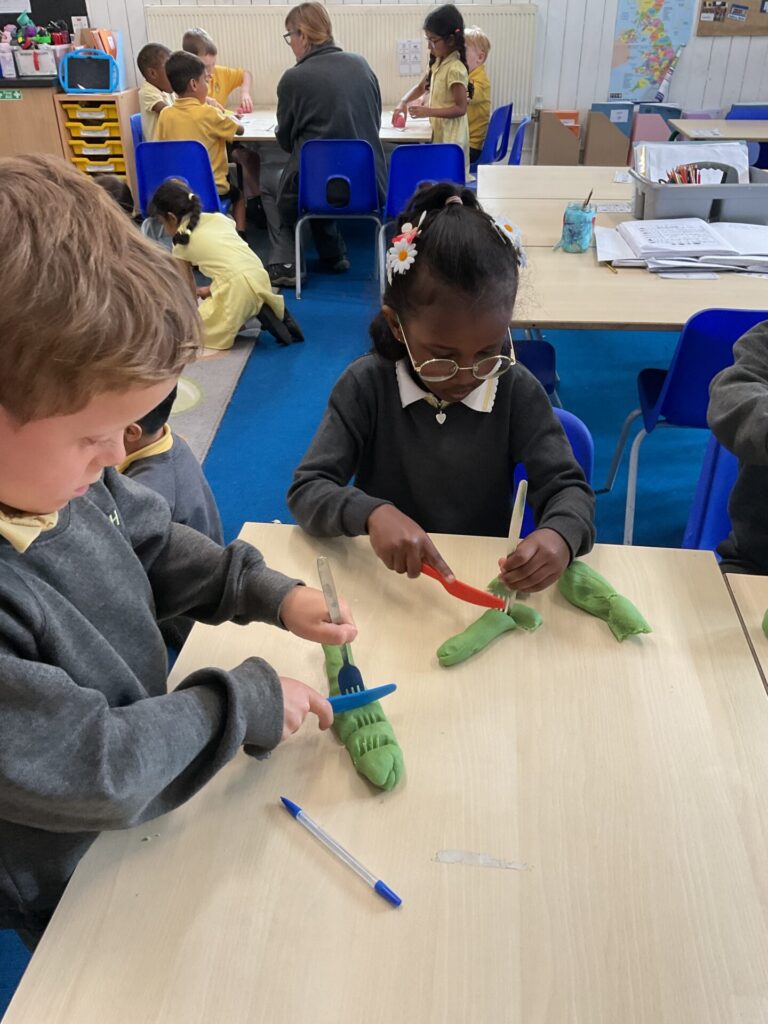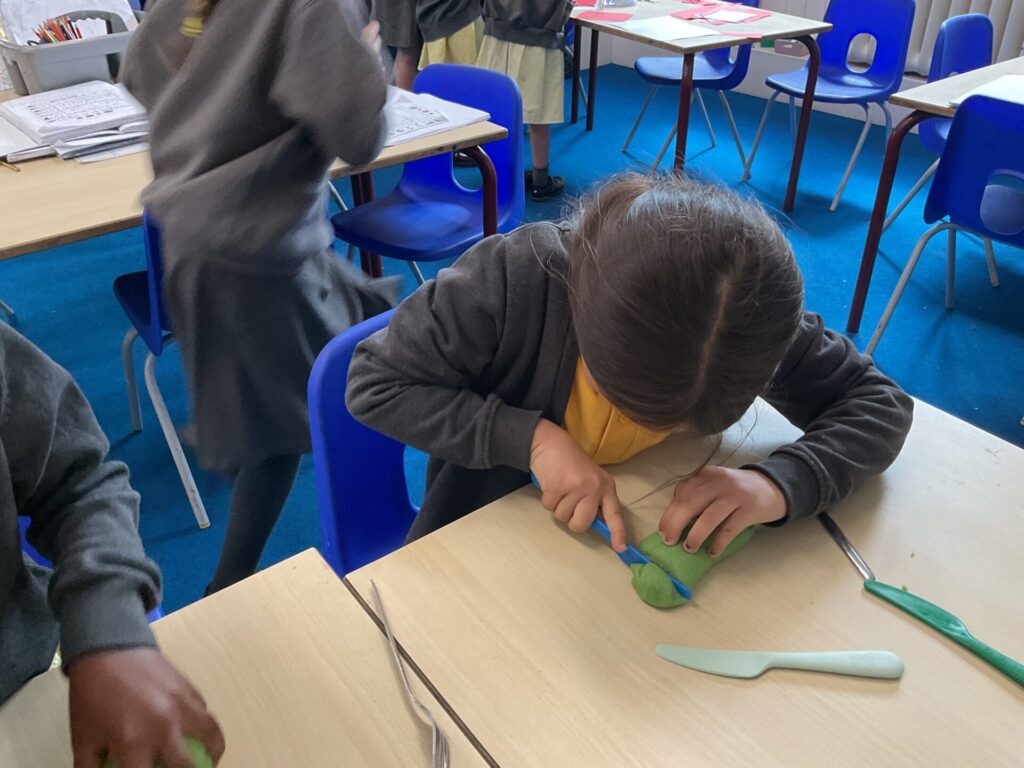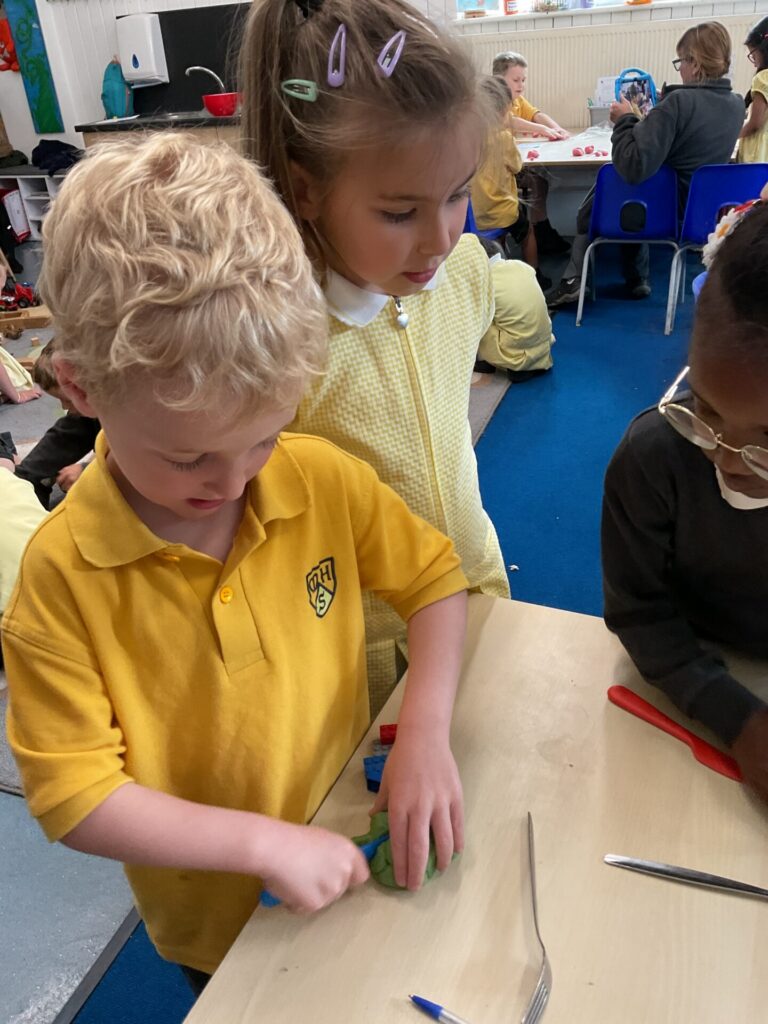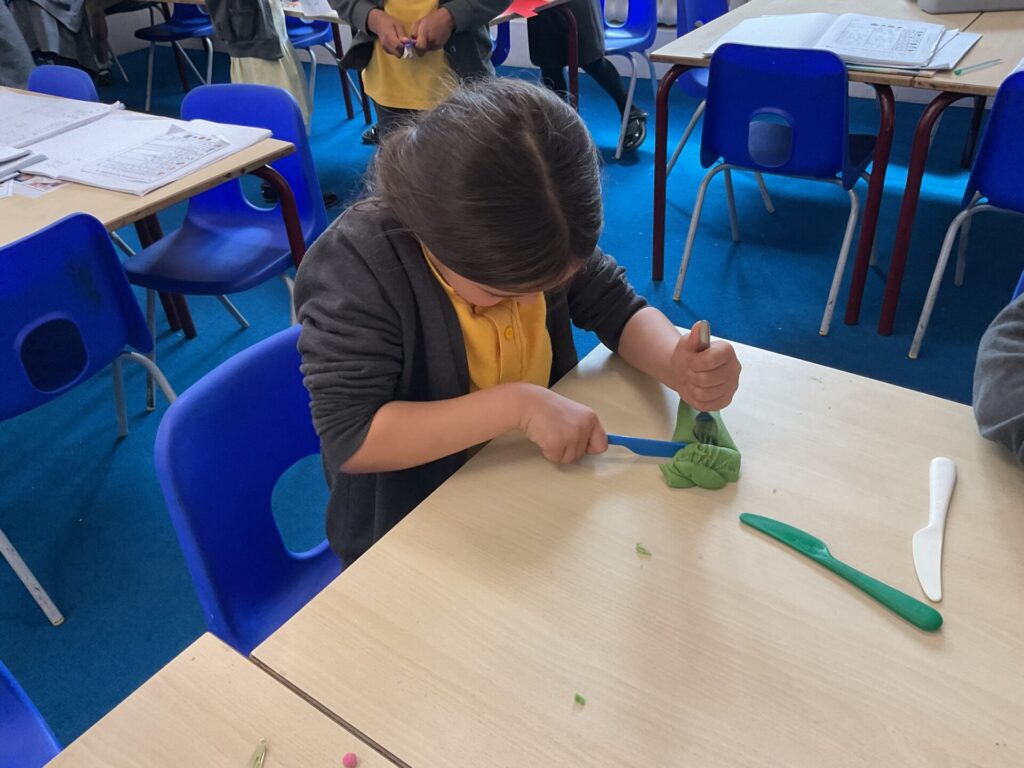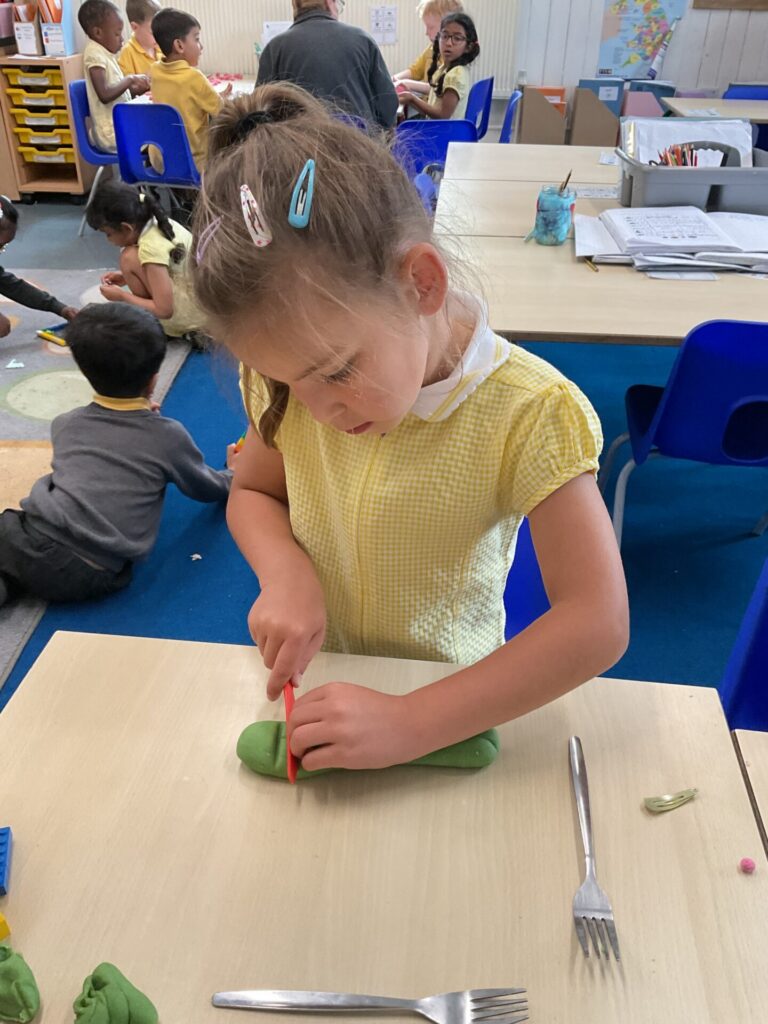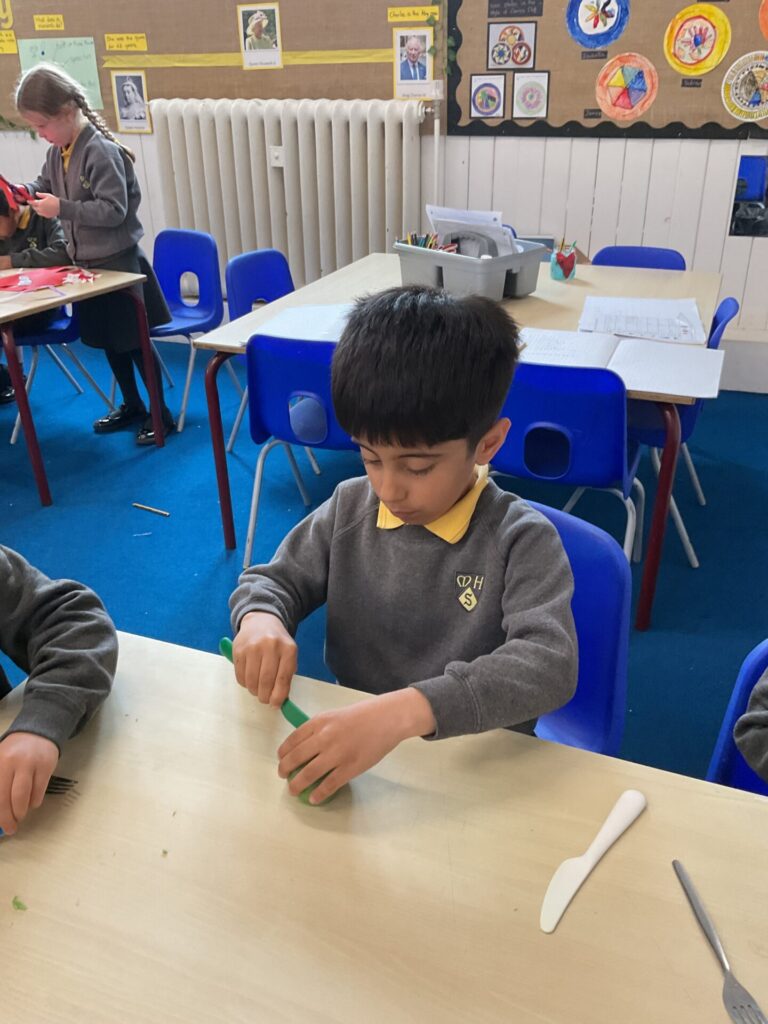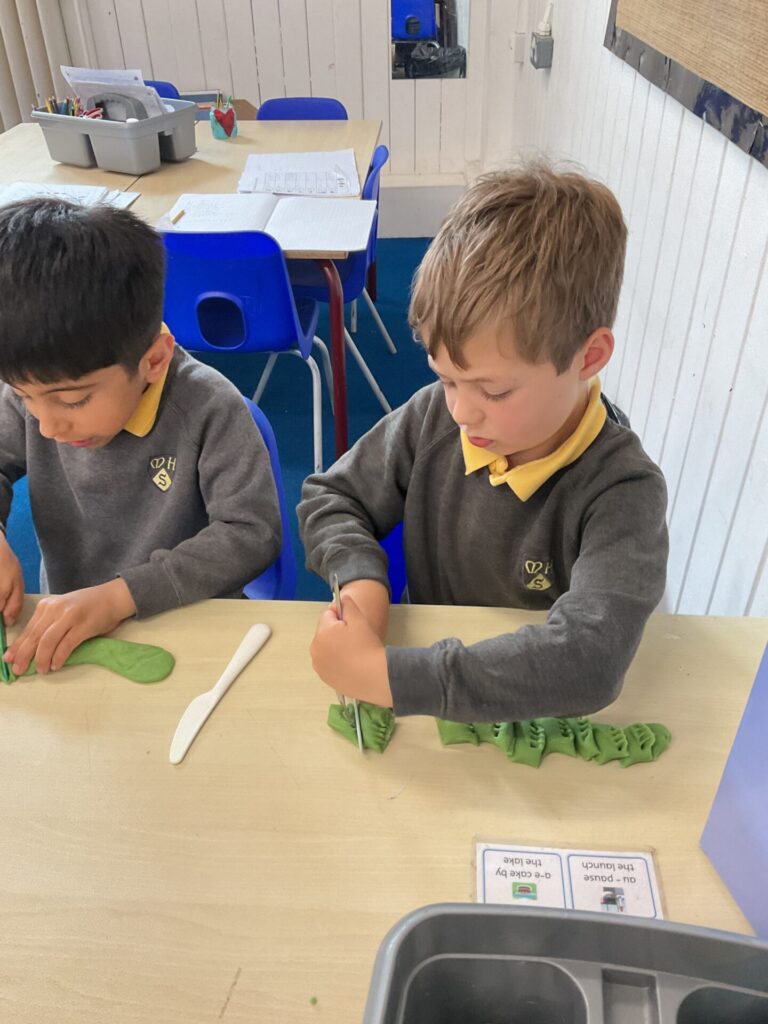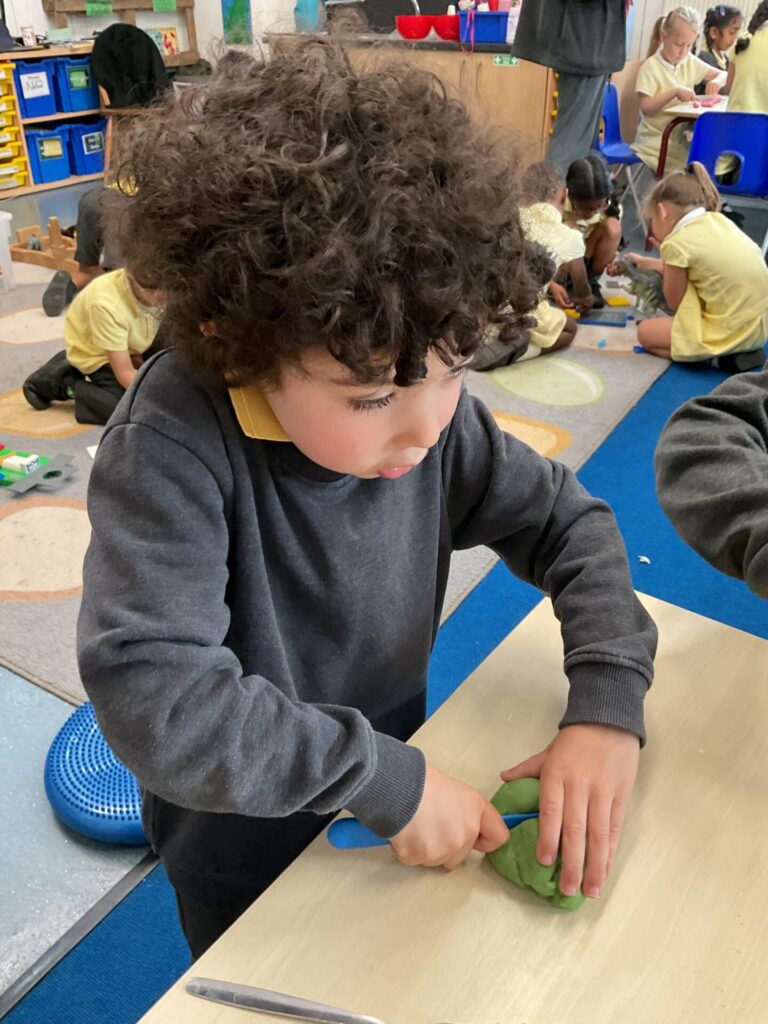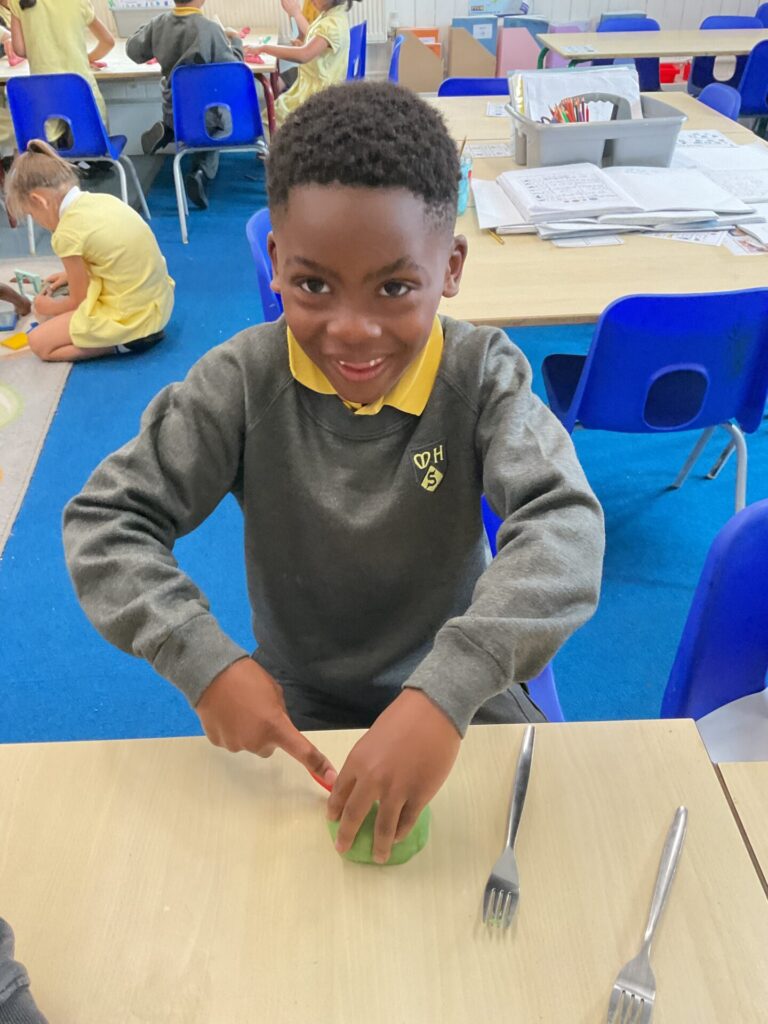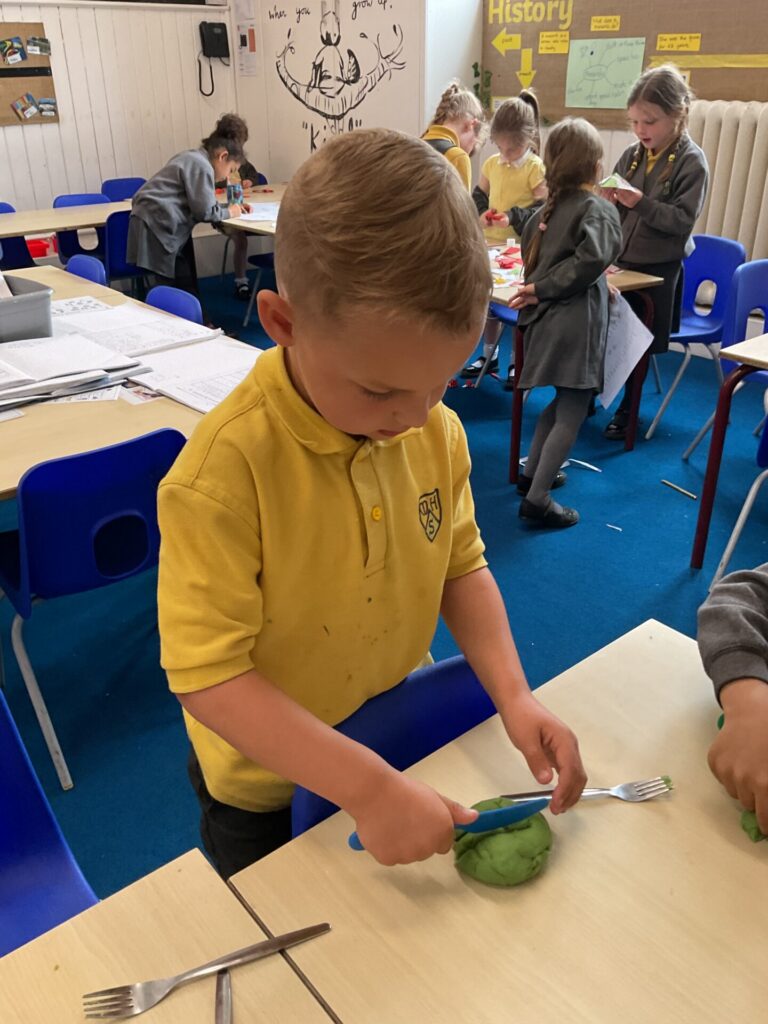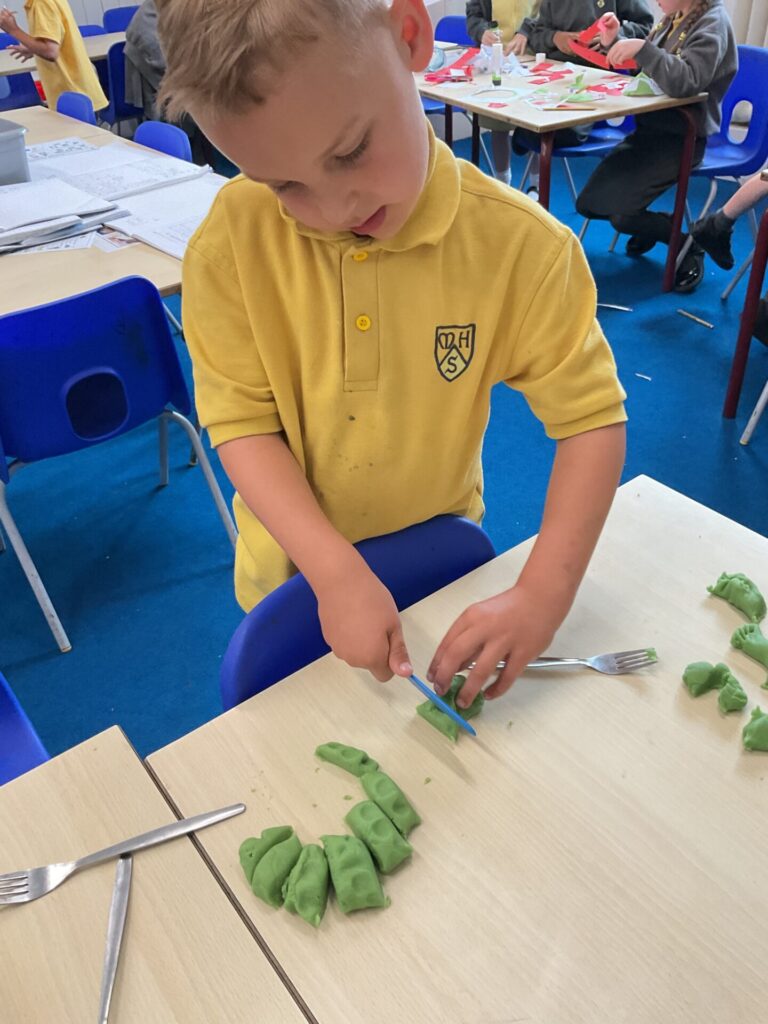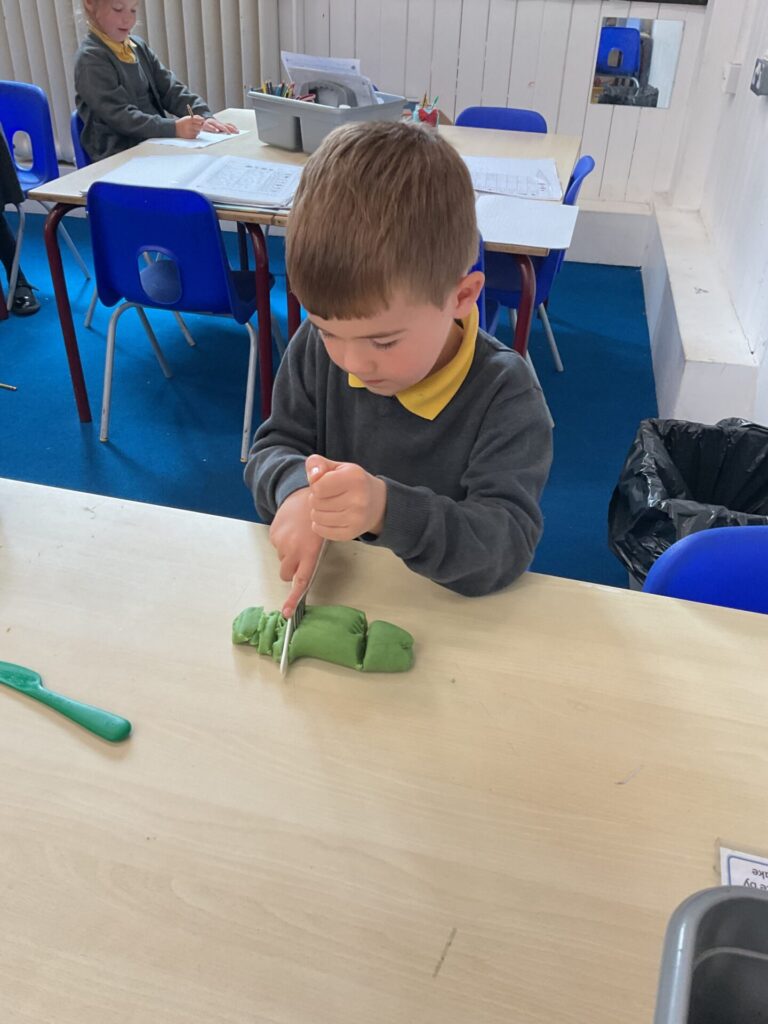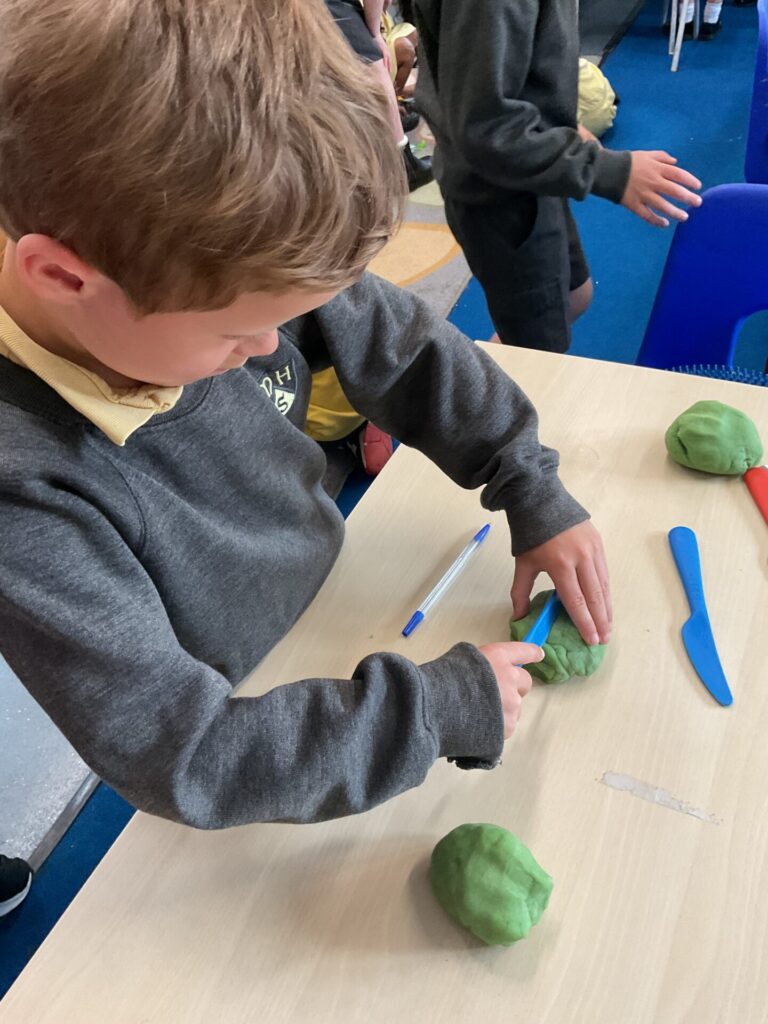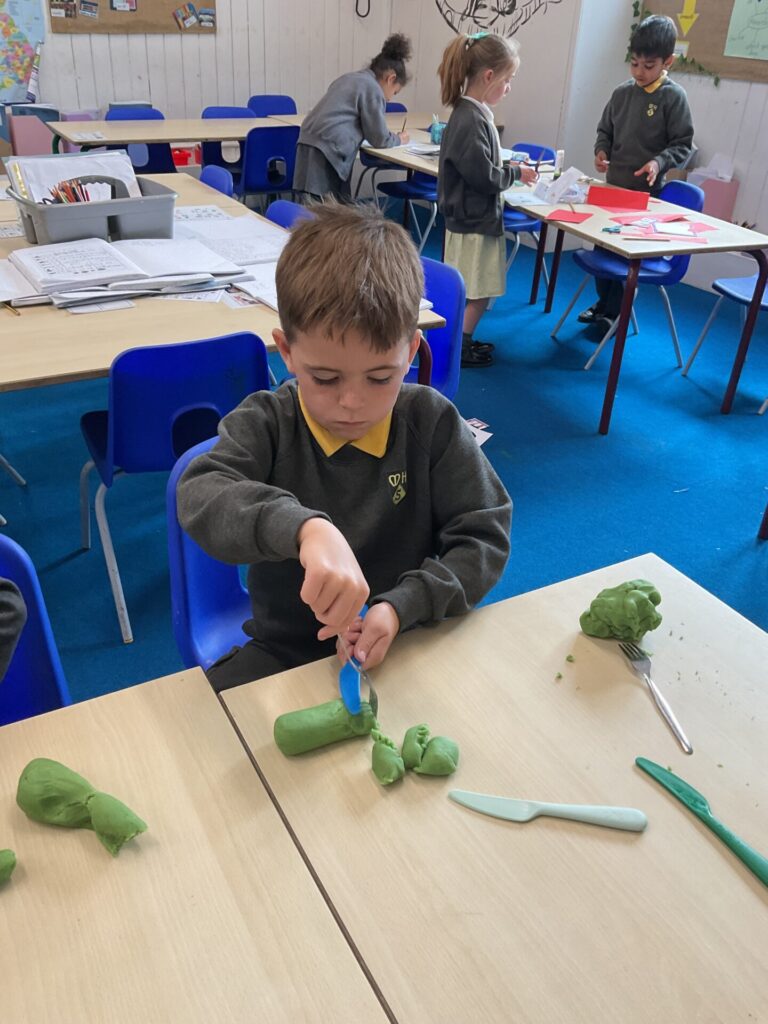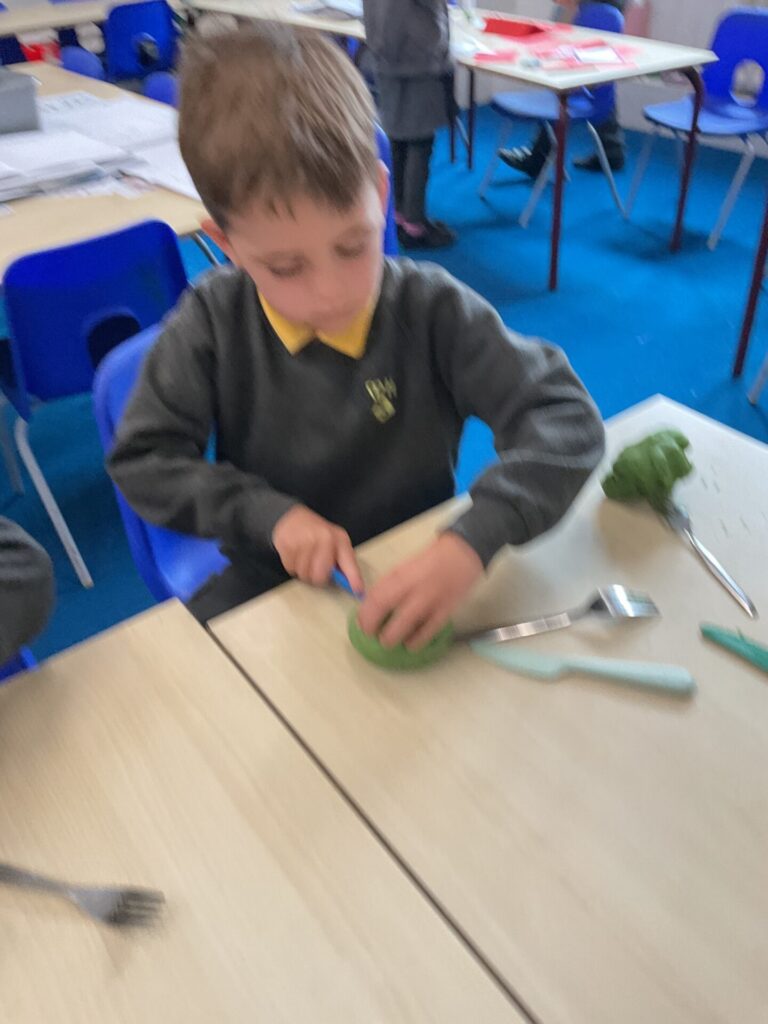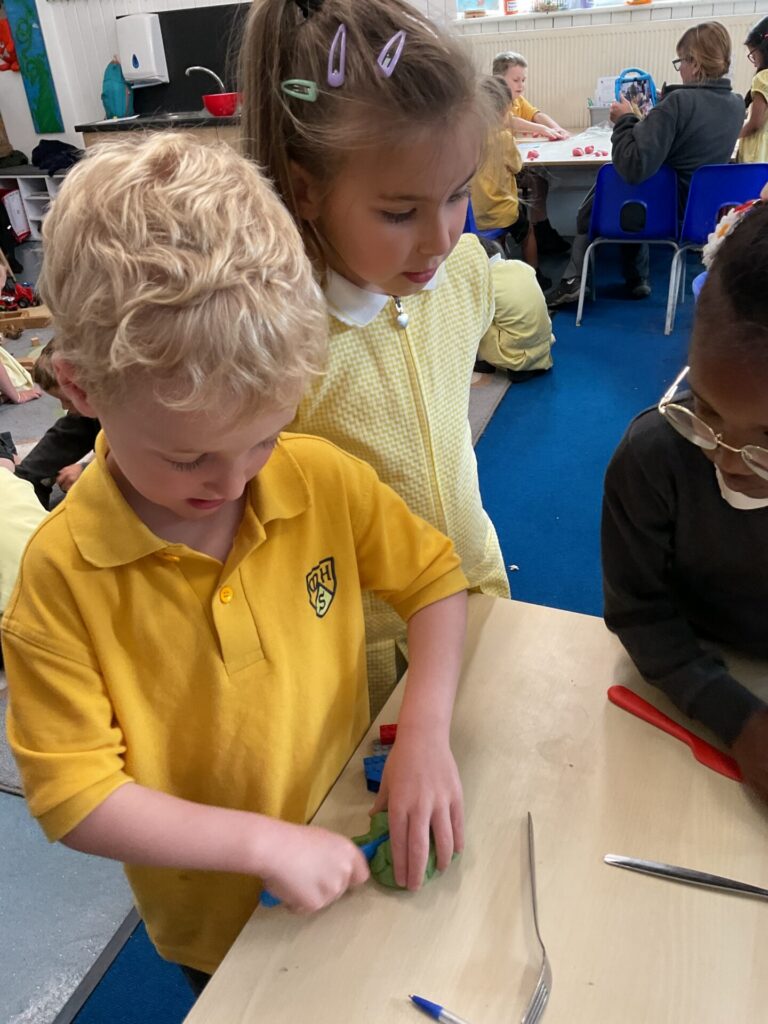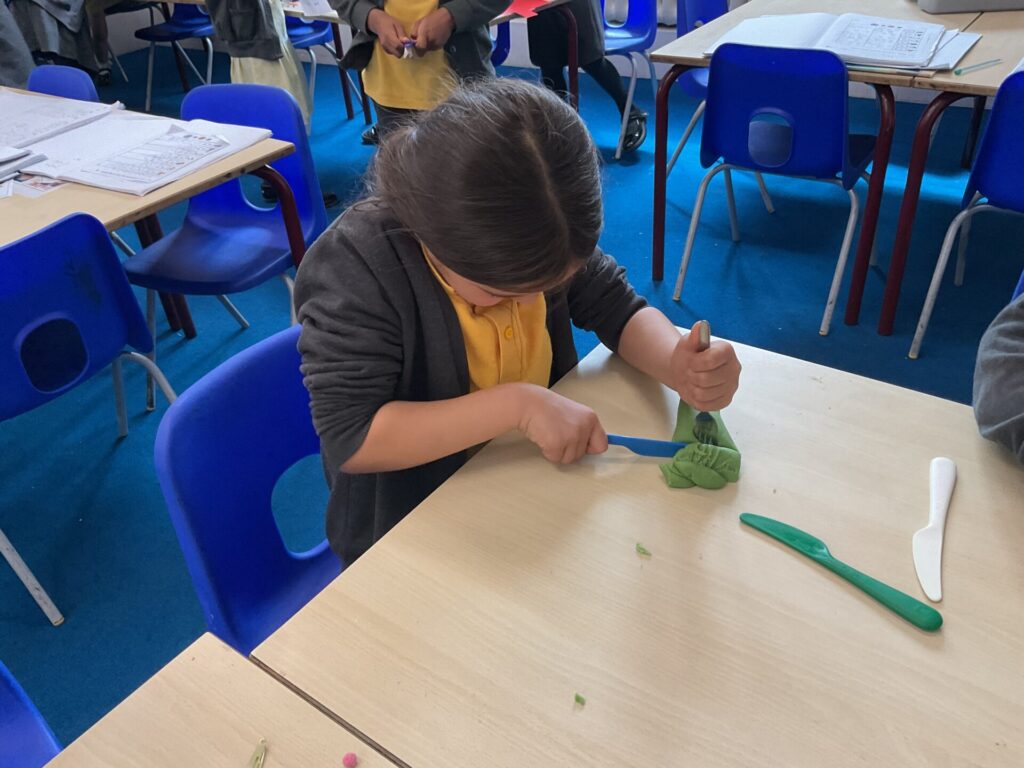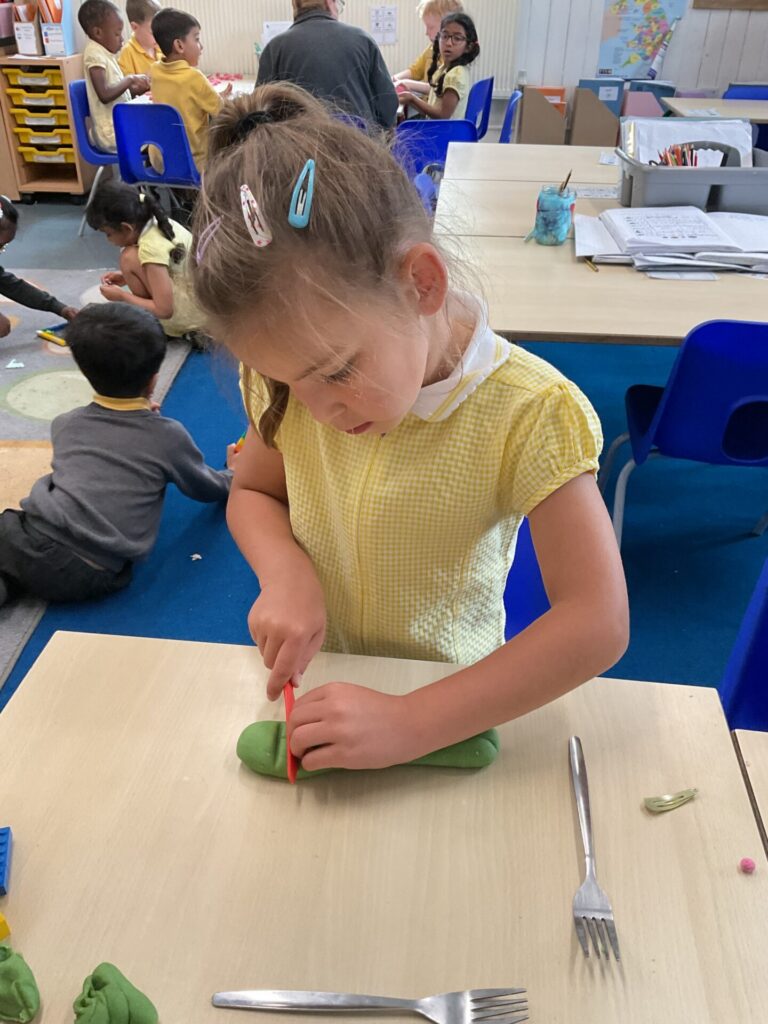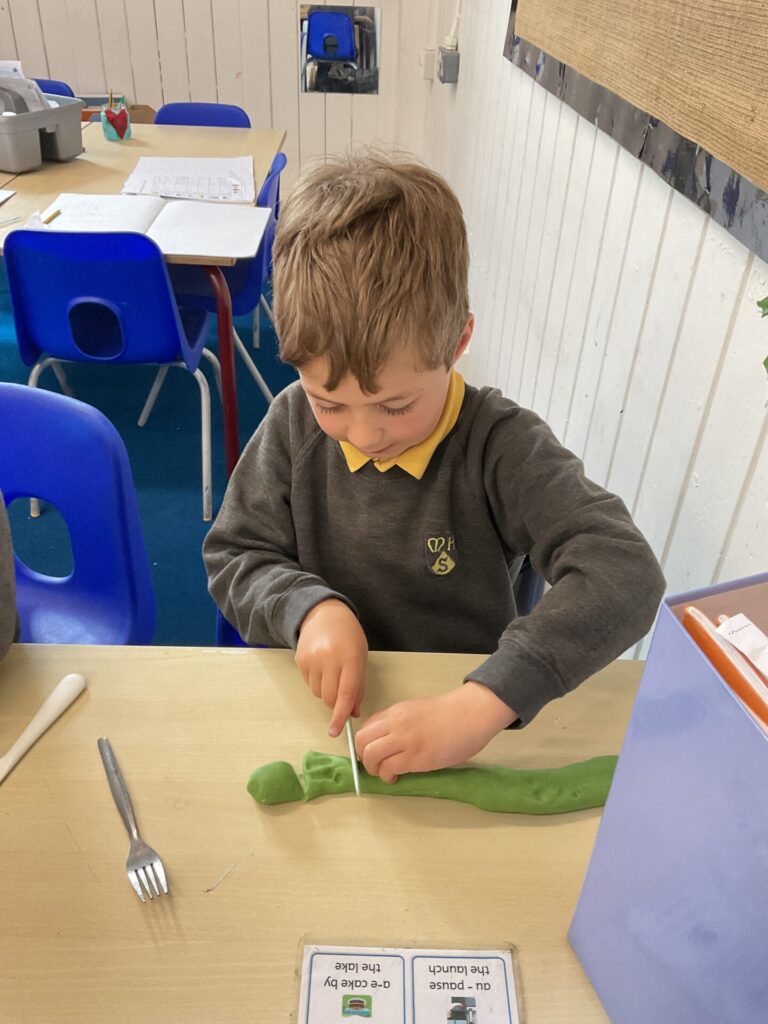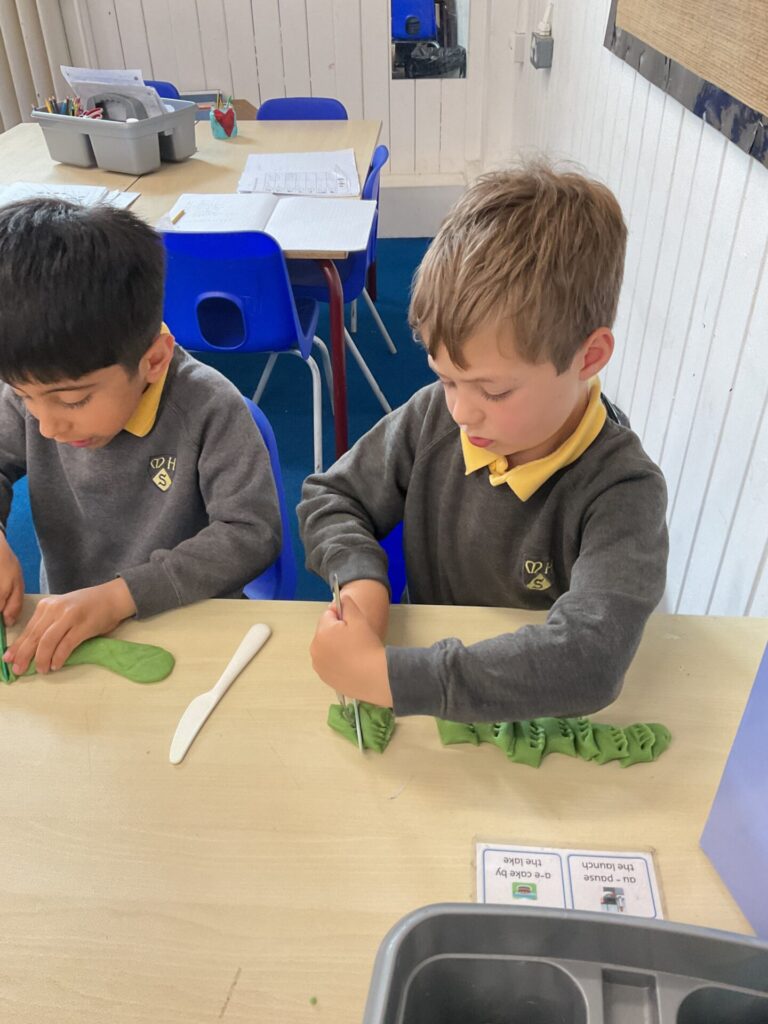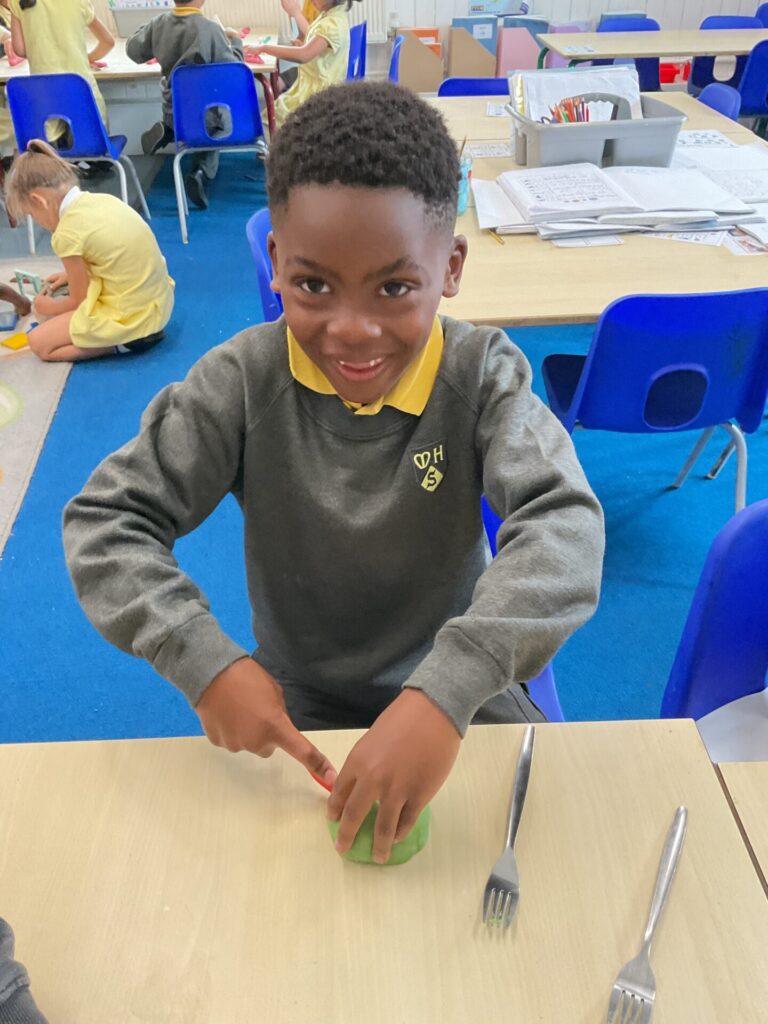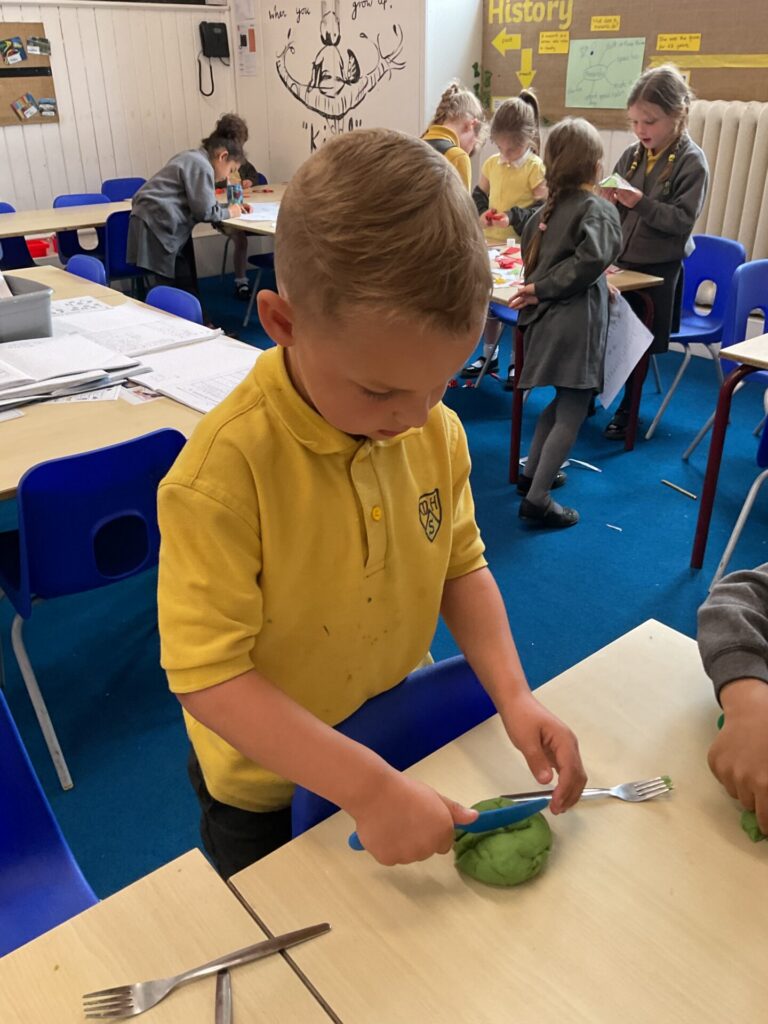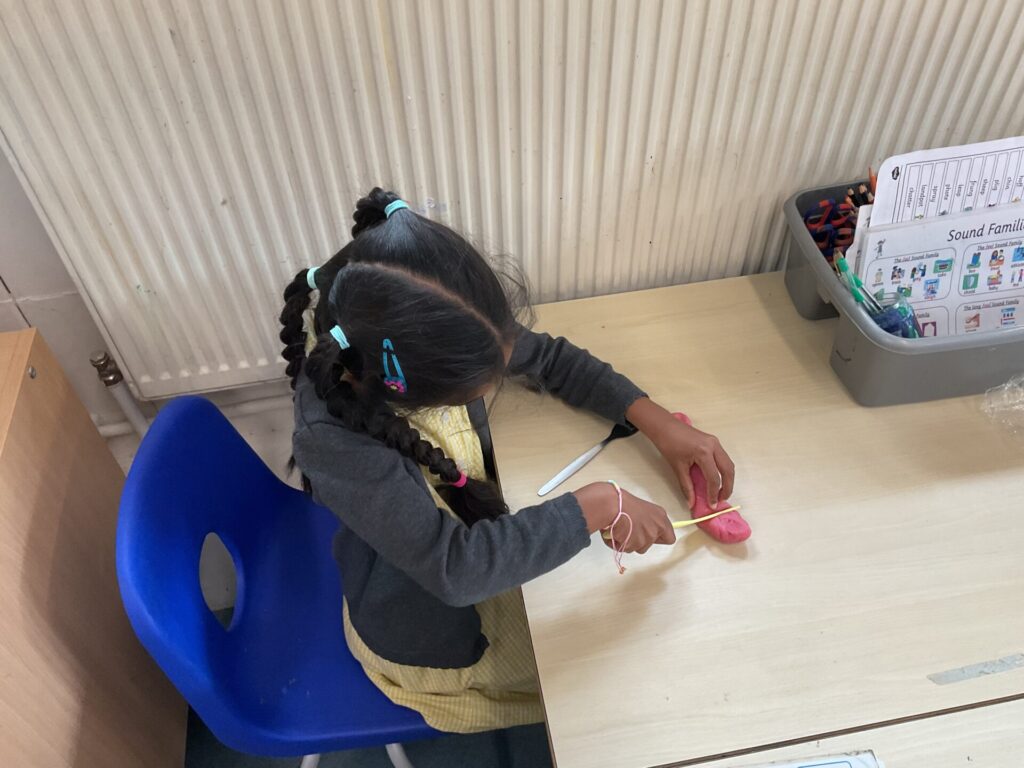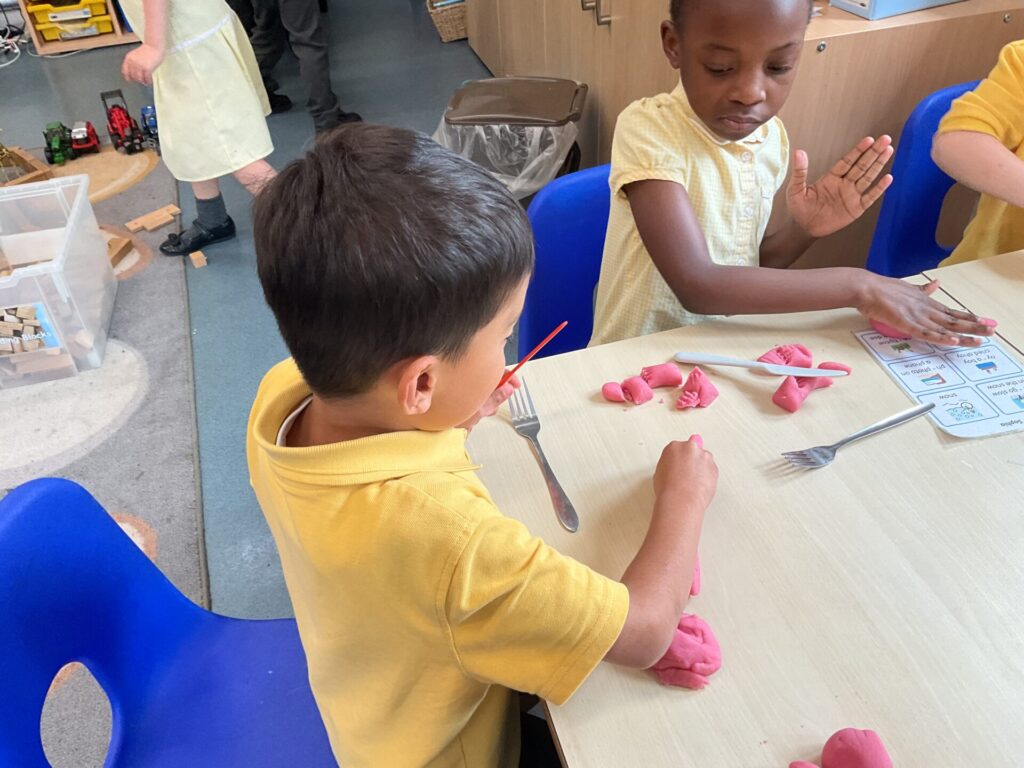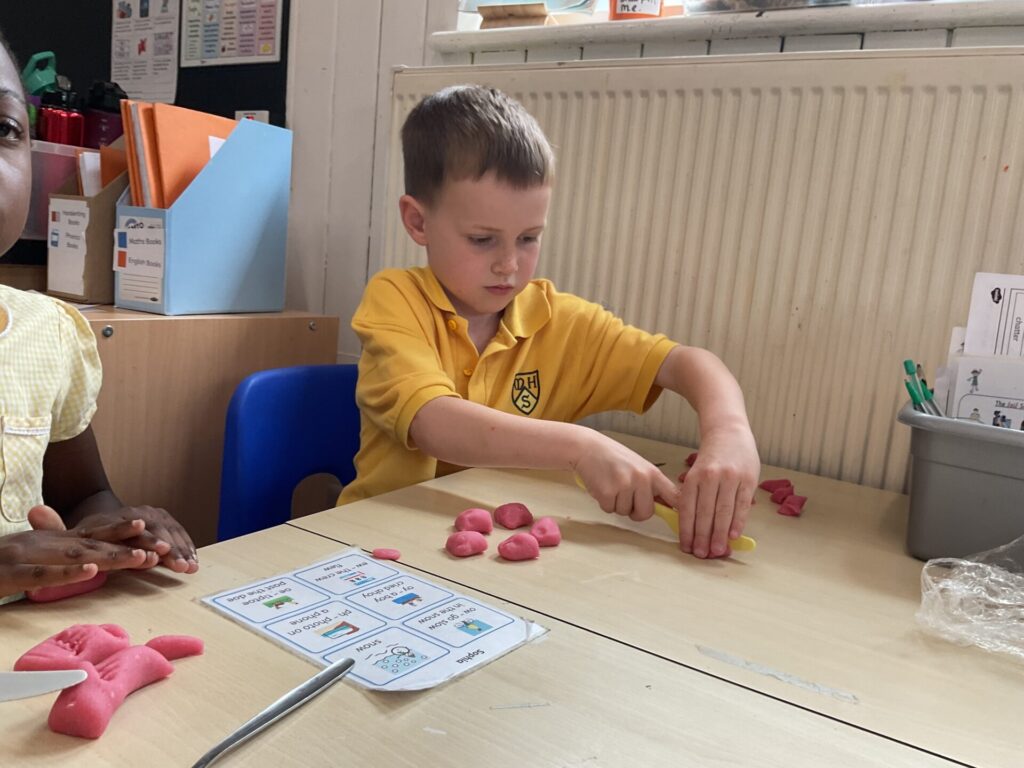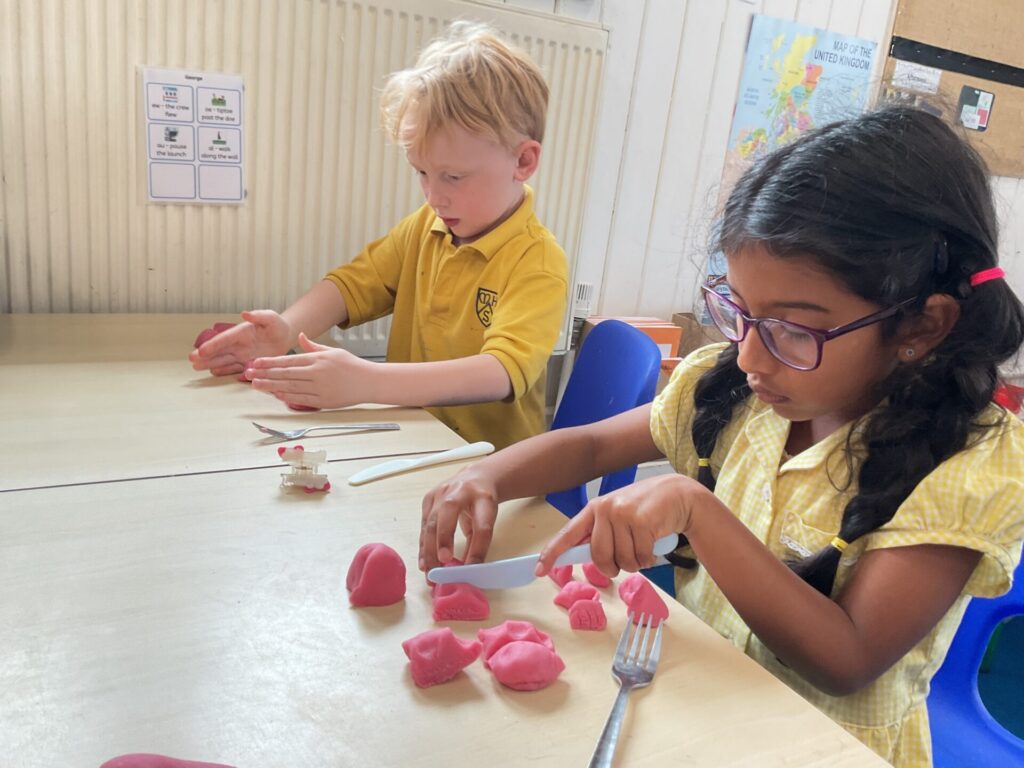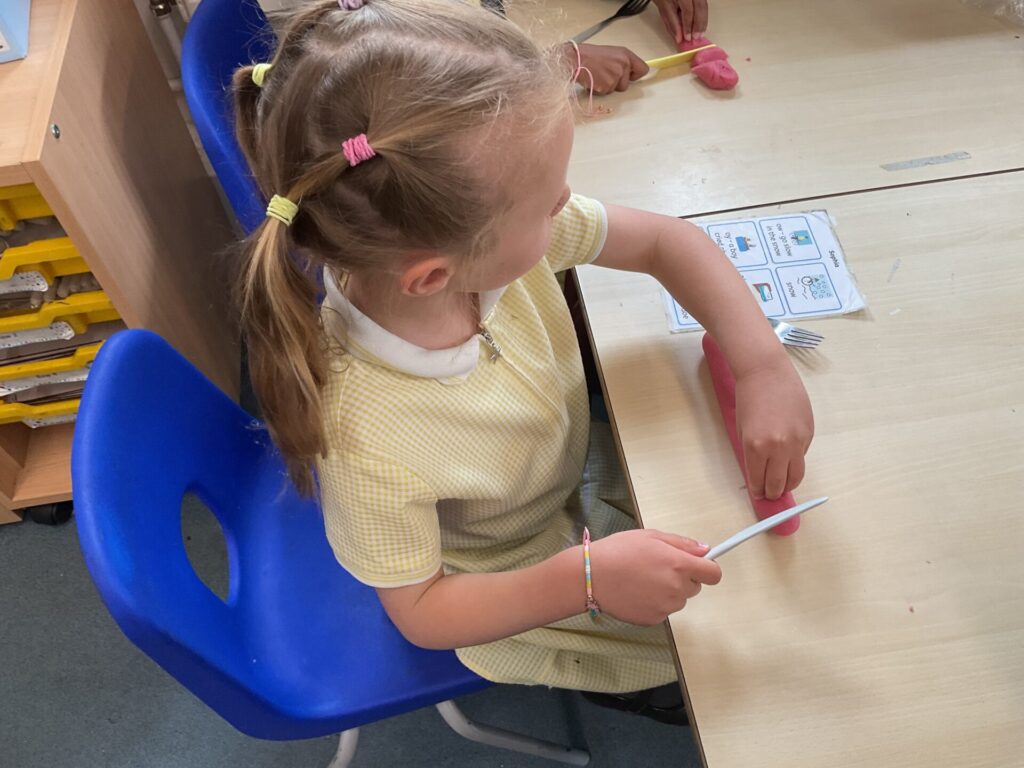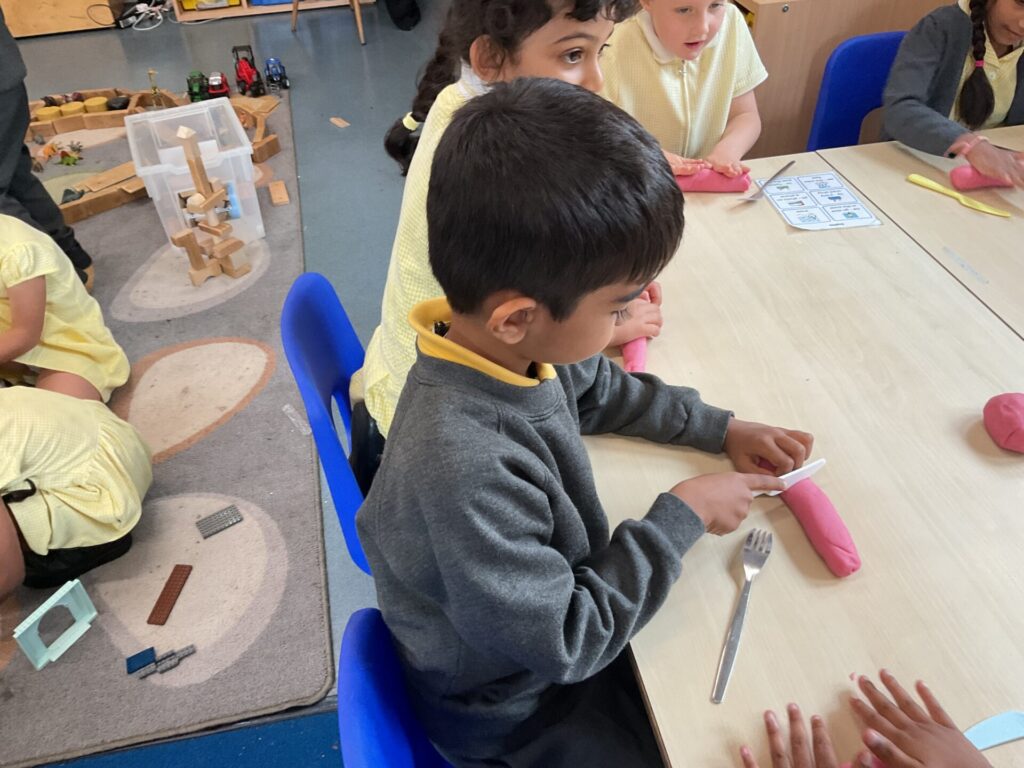
We’ve had an exciting and hands-on start to the week in Year 1 as we’ve launched our brand-new Design and Technology (DT) unit – fruit kebabs! The children in Moorhen Class and Kingfisher Class have been busy learning the skills they’ll need to safely prepare food and will be working towards making their very own delicious and healthy fruit kebabs for their final product.
🍓 Safe Cutting Skills 🍌
This week, we began learning how to cut safely using real kitchen tools. We introduced our ‘Word of the Day’ – slice – and explored what it means and how to do it safely. The children were full of brilliant ideas and showed great enthusiasm and maturity when learning about knife safety.
Here are the three golden rules they came up with:
-
Bridge Hold – Use a bridge hold with the knife blade pointing down (never up!) to cut between your fingers safely.
-
Claw Grip – Tuck your fingers under in a claw shape to keep them safe while slicing.
-
Tidy Workspace – Always keep your chopping area clear and clean so there’s nothing to trip over or get distracted by when holding a knife.
It’s been wonderful to see the children so engaged in practising these skills with care and confidence!
We can’t wait to see the children’s final fruit kebab creations and celebrate all the practical and tasty learning along the way!
How to help at home
- Use real kitchen vocabulary like “slice,” “chop,” “careful,” and “sharp” to build understanding and confidence.
- Let your child help prepare a snack using a child-safe knife (supervised) – try cutting bananas, strawberries, or cucumber.
- Talk through knife safety as they cut – encourage the bridge hold and claw grip techniques they’ve learned.
- Create a fruit face or pattern together using different sliced fruits – this helps with both creativity and fine motor skills.
- Write a simple recipe list for a snack they have made (or helped to make)
- Practise slicing fruits or vegetables into halves and quarters. “If we cut 1 apple in half, how many pieces do we have?”