
This week we have been learning two powerful mental maths strategies to help us add a two-digit number and a one-digit number more easily:
-
Think 10
-
Rebalancing
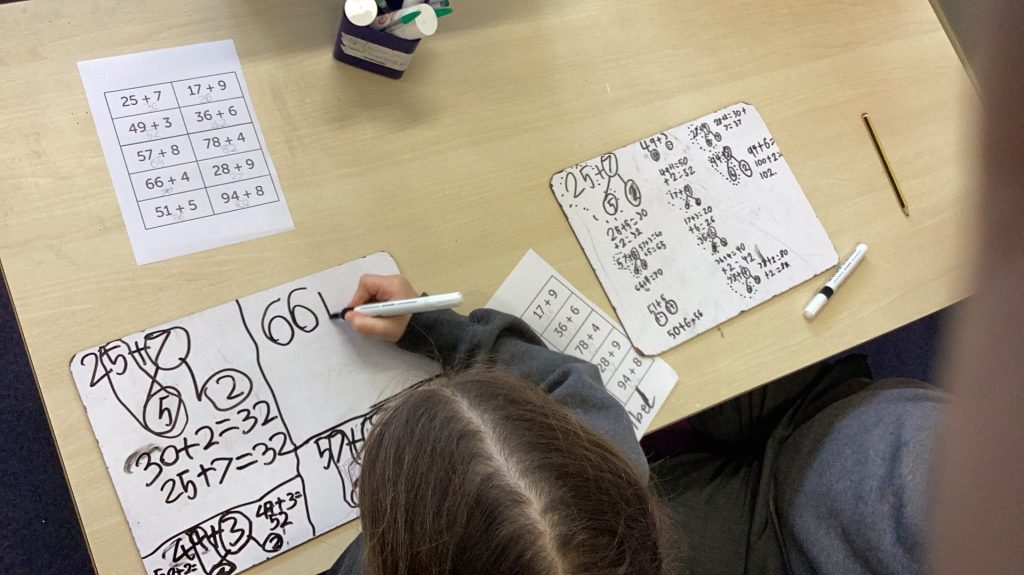
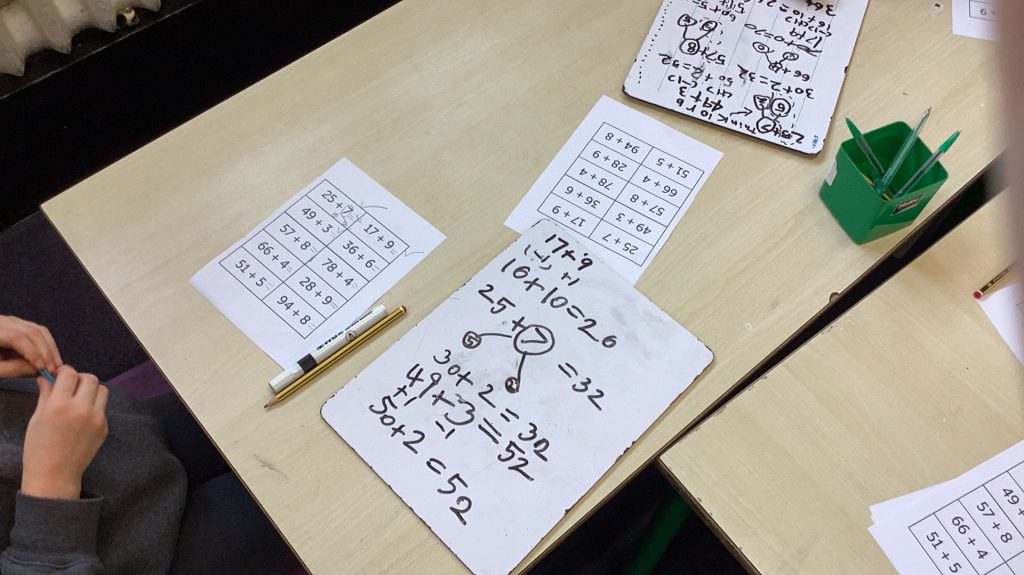
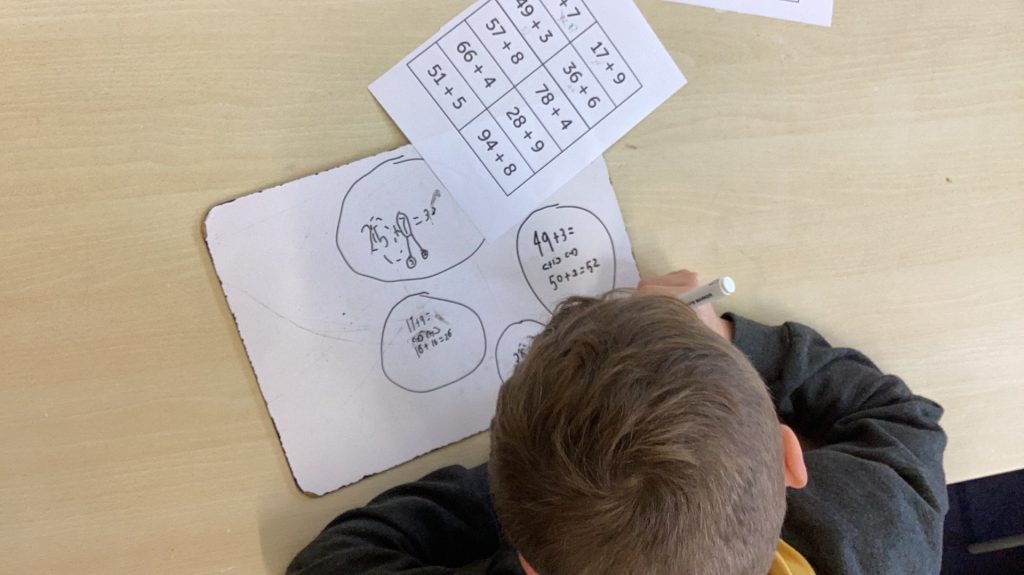
We used our whiteboards and pens to work through the problems step by step. We also used a part-part-whole model to help us see how numbers can be split and adjusted. These strategies help us solve tricky additions in a smart and efficient way!
⭐ Strategy 1: Think 10
Example: 72 + 9
When we use Think 10, we look for a way to make the next multiple of 10 because adding to a multiple of 10 is much easier.
Step 1: Look at 72
We know that:
-
72 needs 8 more to make 80.
Step 2: Break apart the 9
Using our part-part-whole model:
-
9 can be split into 8 and 1
Step 3: Add in parts
-
72 + 8 = 80
-
80 + 1 = 81
So,
72 + 9 = 81
By thinking about making 10 (or the next multiple of 10), the calculation becomes much simpler!
⭐ Strategy 2: Rebalancing
Example: 59 + 8
Rebalancing means we add 1 to one number and take 1 away from the other number to make the calculation easier — without changing the total.
Step 1: Look at 59
59 is very close to 60. That makes it a good number to adjust!
Step 2: Move 1
-
Take 1 away from 8 (8 becomes 7)
-
Add 1 to 59 (59 becomes 60)
Now the calculation becomes:
60 + 7
Step 3: Add
60 + 7 = 67
So,
59 + 8 = 67
The total stays the same because we balanced the numbers — we just made it easier to calculate!
🧠 Why These Strategies Help
-
They make mental maths faster.
-
They help us understand how numbers work.
-
They build confidence with bigger numbers.
-
They show that numbers can be flexible!
Using whiteboards helped us try ideas, make changes, and clearly see how part-part-whole modelling works.
🏡 Home Learning Targets
Here are three targets to practise at home:
-
Use Think 10
Solve:-
64 + 8
-
73 + 9
-
-
Use Rebalancing
Solve:-
48 + 7
-
69 + 6
-
-
Explain Your Thinking
Choose one question and explain:-
How did you split the number?
-
Did you make a multiple of 10?
-
How did you rebalance?
-
Try using a piece of paper to draw a part-part-whole model just like we did in class!